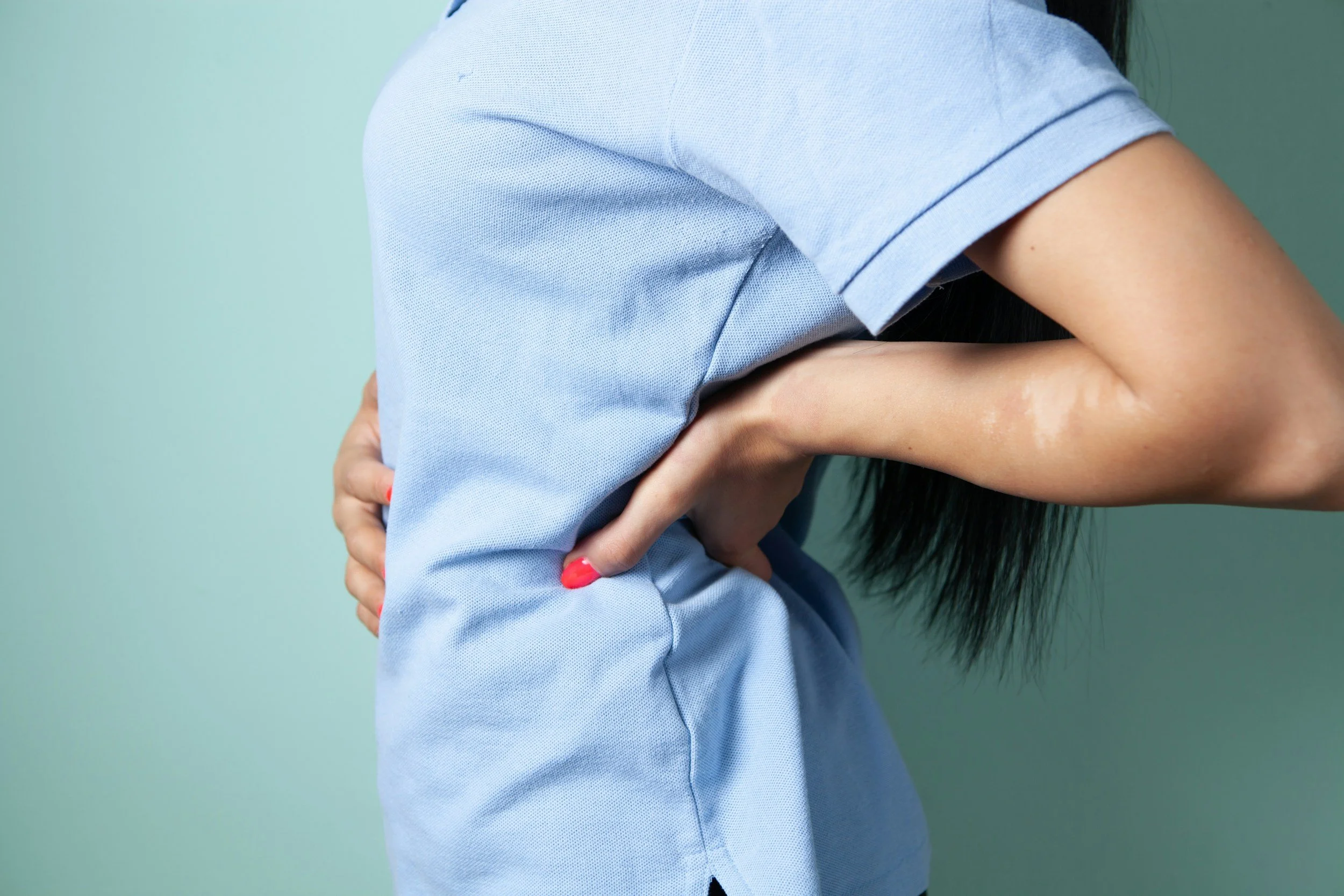
Period pain is common, but it shouldn't stop your life. Learn the signs that need a gynaecologist, what may help at home, and where acupuncture and warmth fit in.
Period pain affects up to three in four women at some point in their lives. Because it is so common, many people are told it is "just part of being a woman" and to push through. Common does not mean you have to put up with it — and some period pain is a sign of a condition that deserves proper care.
Two kinds of period pain
Primary period pain has no underlying disease. It usually starts within a few years of your first period. Cramping in the lower abdomen begins just before or as bleeding starts and eases within two to three days. It can spread to the lower back or thighs, sometimes with nausea, loose stools or headaches.
Secondary period pain is caused by a condition in the pelvis, such as endometriosis, adenomyosis or fibroids. It tends to start later, last longer or get worse over time.
See a gynaecologist if you notice any of these
Pain that is getting worse year by year, or started after age 25.
Pain that stops you from working, studying or sleeping, even with painkillers.
Pain outside your period, during sex, or when passing urine or stools.
Very heavy bleeding, large clots, or bleeding between periods or after sex.
Difficulty getting pregnant alongside painful periods.
Endometriosis in particular often takes years to diagnose because pain is dismissed. If your pain feels like more than "normal cramps," trust that feeling and ask for an assessment.
What may help at home
Warmth. A heat pad or warm water bottle on the lower abdomen.
Movement. Gentle walking, stretching or yoga can ease cramping.
Pain relief. Anti-inflammatory painkillers work best taken early. Ask your doctor or pharmacist what is suitable for you.
Rest and sleep. Tiredness and stress can make pain feel worse.
Acupressure. A commonly used point sits about four finger-widths above the inner ankle bone, just behind the shin bone. Press firmly for one to two minutes on each leg. Do not use this point if you are or may be pregnant.
How Chinese medicine looks at period pain
In Chinese medicine, period pain is often described in terms of blood flow and warmth in the lower abdomen. Pain that feels cramping and eases with a hot water bottle is often seen as "cold". Pain with clots or a stabbing quality is seen as stagnation. These patterns guide which points we choose and whether warmth is used.
In The Balance treatment, we combine acupuncture chosen for your cycle phase with moxibustion — gentle warmth held above the lower abdomen. Sessions can take place during your period, and we adjust techniques accordingly.
Working alongside your doctor
If you have endometriosis, adenomyosis or fibroids, keep seeing your gynaecologist regularly. Acupuncture can sit alongside medical treatment as supportive care for comfort and wellbeing. Please bring any scan or blood test reports to your first visit.
Book a consultation to talk about your cycle. We recommend weekly sessions across three cycles so we can track changes together.
Recent Posts

Categories:
Ear Seeding